
WELCOME BONUS 300%
UP TO €2000 + 100
FREE SPINS
UP TO €2000 + 100
FREE SPINS
Home → Games
Casino games at Casino Winnita
Casino Hold'em: Ante Payout Up to 100:1
The Casino Hold'em Ante bet offers a Royal Flush payout of 100:1, which is the highest possible return for this specific wagering component. This generous multiplier contrasts with the Straight flush payout of only 20:1, creating a significant variance in potential winnings for high-ranking hands. Consequently, players targeting large payouts must prioritize building strong hands rather than settling for lower-tier combinations during gameplay.
Standard rules dictate that the Call bet always pays at 1:1 odds, regardless of the final hand strength achieved by the participant. In contrast, the Ante payout scales dramatically from 1:1 for a simple Straight up to 100:1 for the rarest Royal Flush combination. This structure ensures that risk increases proportionally with reward, requiring careful strategic decisions before committing additional funds to the pot.
The house edge on the Ante stands at 2.16%, which is significantly higher than the overall game edge of 0.82% when considering the full cycle. This discrepancy arises because the average total wager is 2.64 times the initial Ante amount, diluting the impact of the Ante-specific disadvantage. Players must account for this elevated risk when calculating their long-term expected value and bankroll management strategies effectively.
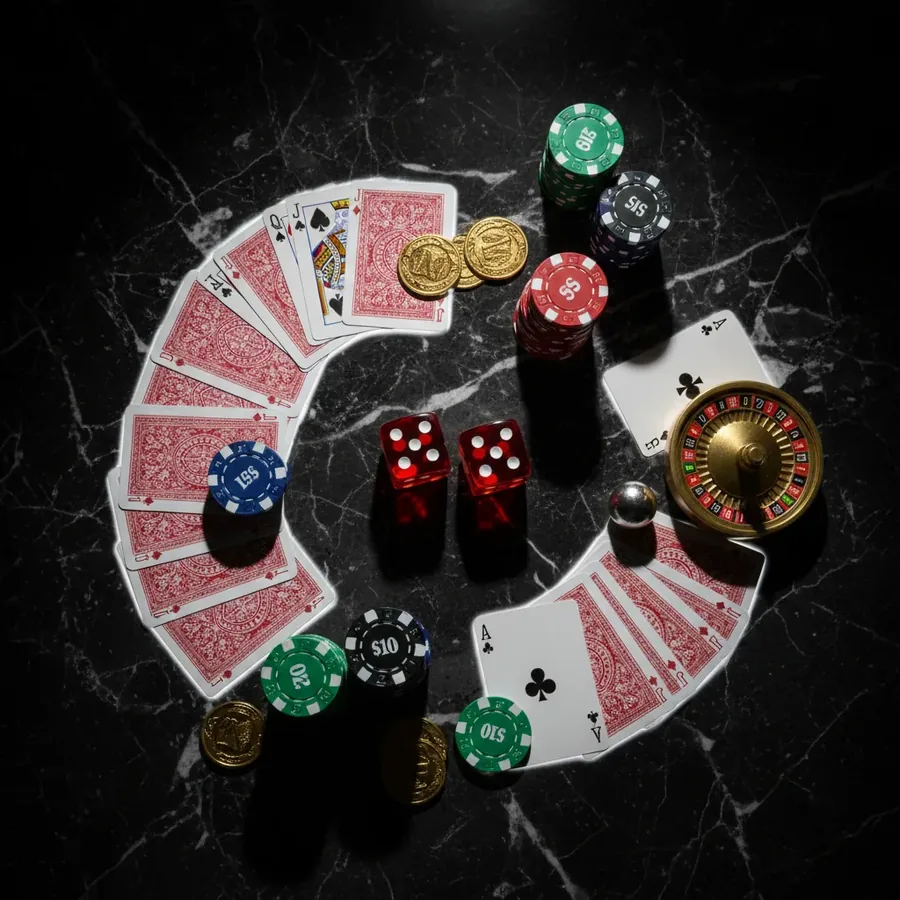
Hold or discard five cards: the decision
Video Poker Deuces Wild features four deuces acting as wild cards, fundamentally altering the standard hold and discard decision-making process for every single hand dealt. This unique rule allows for complex combinations like Five of a Kind, which pays 15 coins and is impossible in traditional video poker variants without jokers. Players must evaluate whether holding these wilds yields a higher expected value than discarding them for new draws.
The Full Pay version of Deuces Wild boasts an RTP of 100.76%, representing a negative house edge of -0.76% under perfect optimal strategy conditions. Any deviation from this precise mathematical strategy causes the RTP to drop below 100%, immediately turning the advantage back to the casino. Therefore, strict adherence to the correct hold patterns is essential for maintaining a positive expected value over time.
Natural Royals pay 800 coins while Four Deuces yield 200 coins, establishing a clear hierarchy of hand values that guides player retention choices. The Straight Flush pays 9 coins, whereas a simple Three of a Kind returns only 1 coin, highlighting the massive disparity in rewards. Understanding these specific payout tiers helps players make informed decisions about which cards to keep versus which to discard entirely.
This variant remains the only mass-market game capable of exceeding 100% RTP when played flawlessly with maximum wagers on all eligible lines. Such a condition creates a rare scenario where skilled players can theoretically generate profit over extended sessions if they never err. However, the margin for error is virtually non-existent given the sensitivity of the calculation to minor strategic mistakes.
Pass Line in Craps: Process in Four Steps
The Pass Line bet in Craps begins with the Come Out roll, where winning numbers are 7 or 11 and losing numbers are 2, 3, or 12. If any other number is rolled, it becomes the Point, and the objective shifts to rolling that specific number again before a 7 appears. This two-phase process defines the core mechanic of the most fundamental wager available on the craps table layout.
The base RTP for the Pass Line is 98.59%, resulting in a house edge of 1.41% on the initial wager placed by the participant. Proving per roll contributes only 0.42% to the house advantage, making it one of the fairest bets in terms of immediate volatility. Players should recognize that this edge applies strictly to the original stake before any subsequent odds bets are added.
Taking Free Odds after a point is established introduces a separate wager with a 0.00% house edge, paying true odds based on the point number. For points 4 or 10, the odds pay 2:1, while points 5 and 9 pay 3:2, and 6 and 8 pay 6:5. Combining Pass Line with 3-4-5x odds reduces the combined house edge to just 0.37%, significantly improving overall expected returns.
The standard deviation for the Pass Line bet alone is 1.00, indicating moderate volatility compared to other table games with higher variance profiles. This statistical measure helps players understand the typical fluctuation in their bankroll during a session of playing this specific market segment. Managing bet sizes relative to this deviation ensures sustainable play over longer periods of activity.
Read Statistics of Last 500 Rounds Correctly
Roulette American wheels feature 38 sectors including both 0 and 00, resulting in a straight bet payout of 35:1 against a probability of 1 in 38. This configuration yields an RTP of 94.74% and a substantial house edge of 5.26%, which is double that of European roulette due to the extra zero. Recent round statistics cannot alter this fixed mathematical reality embedded in the wheel design.
Sic Bo Special Bets exhibit varying house edges ranging from 7.87% for Single Number bets up to 18.52% for Specific Double bets. A Specific Triple pays 180:1 but carries the worst odds, while Any Triple pays 30:1 with a more manageable 13.89% edge for the house. Analyzing short-term results in Sic Bo provides no predictive power regarding future outcomes due to independent event generation.
Blackjack Insurance bets carry a house edge of 7.47% when using six to eight decks, making them statistically inferior to the main game action. This side bet pays 2:1 but loses value rapidly unless the player employs card counting techniques with a true count greater than or equal to +3. Relying on recent insurance frequency trends is futile given the independent nature of each shuffled deck.
Baccarat Tie bets paying 8:1 result in an RTP of 85.64% and a house edge of 14.36%, representing the worst option among main wagers. Even with an enhanced 9:1 payout, the edge remains high at 4.84%, still significantly worse than Banker or Player bets. Tracking past tie occurrences does not increase the likelihood of a future tie occurring in subsequent rounds.
Straight 35:1 Against the Chance of 1 in 37
American Roulette pays Straight bets at 35:1, but the actual probability of winning is 1 in 38 due to the presence of both 0 and 00 pockets. This discrepancy creates a house edge of 5.26%, meaning the casino retains 5.26 cents for every dollar wagered on a single number over time. The payout structure fails to reflect the true odds, ensuring a long-term loss for the player.
European Roulette offers a slightly better scenario with a single zero, reducing the straight bet probability to 1 in 37 while maintaining the 35:1 payout. This adjustment lowers the house edge to approximately 2.70%, providing a marginally improved expected value compared to its American counterpart. Players seeking better odds should prefer tables featuring this single-zero configuration exclusively.
Split bets in American Roulette pay 17:1 for covering two adjacent numbers, while Street bets covering three numbers pay 11:1 respectively. Corner bets covering four numbers offer an 8:1 payout, and Six Line bets covering six numbers pay 5:1 consistently across all positions. Dozen and Column bets provide even money returns at 2:1, balancing risk and reward for broader coverage strategies.
The Red/Black outside bet in American Roulette pays 1:1, yet the presence of the green zeros reduces the win probability to less than fifty percent. This structural disadvantage applies equally to all even-money bets such as Odd/Even or High/Low, ensuring the house maintains its 5.26% edge universally. No betting system can overcome this mathematical certainty inherent in the wheel's design and payout schedule.
Game categories at a glance
| Category | Examples | Stakes From | Highlight |
|---|---|---|---|
| Slots | Rise of Olympus, Mega Moolah, Fire Joker | 0,10 EUR | thousands of titles |
| Table games | Roulette, Blackjack, Baccarat | 0,50 EUR | classic rules |
| Live casino | PowerUP Roulette, Blaze Roulette | 0,20 EUR | real dealers |
| Jackpot games | Mega Moolah, Divine Fortune, Age of the Gods | 0,20 EUR | progressive pools |
| Instant games | Aviator, Plinko, Mines | 0,10 EUR | fast rounds |
| Video poker | Jacks or Better, Deuces Wild | 0,25 EUR | strategy based |
Before Double Down: read the open dealer card
The payout speed of a Blackjack hand depends heavily on the dealer's upcard, specifically when considering the 6 Decks S17 DAS DOA variant which yields an RTP of 99.54%. This specific rule set includes the ability to double after split, optimizing the mathematical expectation for the player compared to stricter tables with higher house edges. Understanding these parameters allows the analyst to determine the exact return rate before committing funds to a potentially volatile round of play.
Standard blackjack payouts are typically 3:2, but some tables offer 6:5 instead, which increases the house edge by exactly 1.39 percentage points. A $10 bet on a natural blackjack pays only $12 under the 6:5 rule, whereas the standard 3:2 payment would yield $15. This difference directly impacts the long-term theoretical return, making the 3:2 table significantly more favorable for players seeking better payout speeds and higher overall value.
Ignoring basic strategy can drastically alter the expected outcome, as seen in the Insurance side bet which carries a house edge of 7.47% for 6-8 deck games. The correct move is always to decline insurance unless counting cards with a true count of +3 or higher, as the base strategy mandates rejection. This decision preserves the game's inherent RTP, ensuring that the player does not surrender a significant portion of their potential winnings to the casino's statistical advantage.
Multihand Blackjack with Up to 5 Hands
Playing multiple hands simultaneously affects the variance and the effective payout speed of a session, as each hand operates independently within the same shoe. The 6 Decks S17 DAS DOA configuration provides a robust framework for multihand play, maintaining an RTP of 99.54% across all active bets. Analysts note that while the house edge remains constant per hand, the total volume of action increases, influencing the bankroll management requirements for sustained play.
Resplitting Aces is a crucial rule modifier that improves the player's position, reducing the house edge by approximately 0.08 percentage points. This feature allows players to separate aces into new hands, potentially creating multiple opportunities for strong starting totals like blackjacks. When combined with doubling after split, this rule set enhances the strategic depth available to the player during high-variance moments in the game.
Double After Split (DAS) offers another layer of optimization, lowering the house edge by roughly 0.14 percentage points compared to restricted doubling rules. This allowance permits players to double down on any hand created from a split, maximizing the utility of favorable cards drawn during the hand development phase. Such rules contribute to the overall 99.54% RTP, providing a mathematically superior environment for those employing optimal strategies across multiple concurrent hands.
Before sitting down: check table bet limits
Table limits dictate the maximum exposure per round, directly influencing the potential speed and magnitude of payouts during a winning streak. While specific limits vary, the mathematical models for games like Baccarat Banker show a house edge of just 1.06%, favoring low-limit tables for extended play. Players must verify these boundaries to ensure their bankroll aligns with the betting range, preventing premature exhaustion during high-variance sessions or streaks.
In Baccarat, the Tie bet at 9:1 payout carries a house edge of 4.84%, making it a risky proposition even at minimum stakes. Conversely, the Banker bet with its 5% commission maintains a superior RTP of 98.94%, offering a more reliable path for steady accumulation. Checking limits ensures that players can consistently wager on the statistically strongest options without being forced into high-edge side bets due to arbitrary betting constraints.
Craps Pass Line bets operate with a house edge of 1.41%, but the introduction of Free Odds changes the dynamic entirely by removing the house advantage on the odds portion. Tables often limit the multiple of odds allowed, such as 3-4-5x, which caps the amount of zero-edge money a player can expose. Understanding these limits is essential for calculating the combined house edge, which drops to 0.37% when utilizing maximum odds on the Pass Line.
Video Poker variants like Jacks or Better 9/6 require a maximum bet of 5 coins to qualify for the top Royal Flush bonus of 4000 credits. Betting less than the maximum reduces the return on investment, as the base paytable remains unchanged while the bonus payout scales linearly with coin input. Players should confirm table limits allow for max coin wagers to achieve the advertised 99.54% RTP and avoid suboptimal returns on every single deal.
RNG Roulette vs. Live Table: Four Clear Differences
The American Roulette wheel features 38 sectors including a double zero, resulting in a house edge of 5.26% and an RTP of 94.74%. This higher edge compared to European wheels stems from the additional green pocket, which dilutes the probability of winning straight bets paying 35:1. The presence of this extra sector fundamentally alters the payout speed and frequency of returns for players engaging with RNG versions of the game.
Sic Bo Special Bets exhibit a wide variance in house edges, ranging from 7.87% for Single Number bets up to 18.52% for Specific Doubles. The Specific Triple bet pays 180:1 but carries a steep 16.20% house edge, illustrating the risk-reward trade-off inherent in these high-variance wagers. RNG implementations often allow faster betting cycles than live tables, accelerating the impact of these negative expectations on the player's bankroll over time.
Live dealer games often introduce physical variables absent in RNG software, such as the precise timing of card shuffling or ball deceleration in roulette. However, the underlying mathematics remain consistent; for instance, the Baccarat Player Pair side bet retains its 10.36% house edge regardless of whether it is played via digital interface or live stream. The primary difference lies in the pacing, where live tables enforce slower decision-making intervals compared to the rapid-fire nature of RNG platforms.
The payout structure for Craps Pass Line bets remains 1:1 with a 1.41% house edge, but the integration of Free Odds is more complex in live settings. Physical tables may limit the odds multiple differently than RNG software, affecting the combined house edge which can drop to 0.37% with 3-4-5x odds. Players must observe the specific table rules to understand how much zero-edge capital they can deploy, directly impacting the overall efficiency of their payout strategy.
6 Decks vs. 8 Decks in House Edge
Using 6 decks in Blackjack generally improves the player's odds compared to 8-deck shoes, primarily due to the reduced impact of card removal effects. The 6 Decks S17 DAS DOA variant achieves an RTP of 99.54%, demonstrating the advantage of fewer cards in circulation for optimal strategy execution. This slight mathematical improvement contributes to faster net losses for the casino, theoretically allowing for quicker recovery of deposits through more favorable returns.
Insurance bets in 6-8 deck games carry a house edge of 7.47%, making them highly unfavorable for the average player relying on basic strategy. The number of decks has a minimal effect on this specific side bet's edge, which remains static around 5.88% to 7.47% depending on the exact composition. Players should avoid this bet to preserve the main game's RTP, ensuring that their bankroll is not eroded by high-margin secondary wagers.
Blackjack paying 6:5 instead of 3:2 adds 1.39 percentage points to the house edge, a penalty that outweighs the minor benefits of deck reduction. A 6-deck game with 6:5 payouts yields an RTP of 98.15%, significantly lower than the 99.54% offered by 3:2 variations. This rule change is a critical factor in determining payout speed, as the reduced win amounts slow the growth of the player's balance during successful sequences.
Baccarat outcomes are largely unaffected by deck count, with the Banker bet maintaining a consistent 1.06% house edge across 8-deck shoes. The 5% commission on wins results in an effective payout of 0.95:1, which is the most efficient wager in the game regardless of the number of decks used. Analysts recommend focusing on this bet to maximize theoretical returns, as the mathematical advantage remains stable irrespective of the shoe configuration employed by the casino.
Craps: Pass Line plus Odds lowers the average
The Craps Pass Line bet offers an RTP of 98.59 percent with a house edge of 1.41 percent on the initial wager. This baseline risk is significantly reduced when players utilize the Free Odds feature, which carries a zero percent house edge and pays at true odds. For example, a 3-4-5x Odds mode combined with the Pass Line results in a total game RTP of 99.63 percent. The standard deviation for the Pass Line alone is 1.00, indicating moderate volatility compared to other table games.
The combined house edge drops to 0.37 percent when utilizing the 3-4-5x Odds multiplier alongside the base Pass Line bet. This specific configuration lowers the average cost per roll to just 0.111 percent, making it one of the most efficient wagers available. In contrast, the standalone Come bet shares identical mathematics but requires a separate point establishment phase before contributing to this low edge. Players must wait for a point number to be set before placing additional Odds bets to achieve this mathematical advantage.
Free Odds payouts follow true probability ratios rather than fixed casino margins, ensuring no built-in disadvantage on the extra stake. A Point of 4 or 10 pays 2:1, while Points 5 or 9 pay 3:2, and Points 6 or 8 pay 6:5. These multipliers apply only after the point is established, meaning the initial Pass Line wager remains subject to the 1.41 percent house edge. Combining these elements creates a hybrid betting structure that minimizes long-term theoretical losses effectively.
Game Shows: sectors, multipliers, and bet ranges
American Roulette features 38 sectors including single and double zeros, resulting in a house edge of 5.26 percent and an RTP of 94.74 percent. Straight bets pay 35:1, while Split wagers return 17:1, reflecting the increased difficulty of hitting smaller target areas on the wheel. The additional double zero sector doubles the house advantage compared to European variants, fundamentally altering the expected value for all outside bets. This structural difference makes American wheels less favorable for players seeking lower variance outcomes over extended sessions.
Contact
Live - online chat
Banking









Providers












Winnita Casino 2026